ANGLO-SAXON DIGITAL HUMANITIES

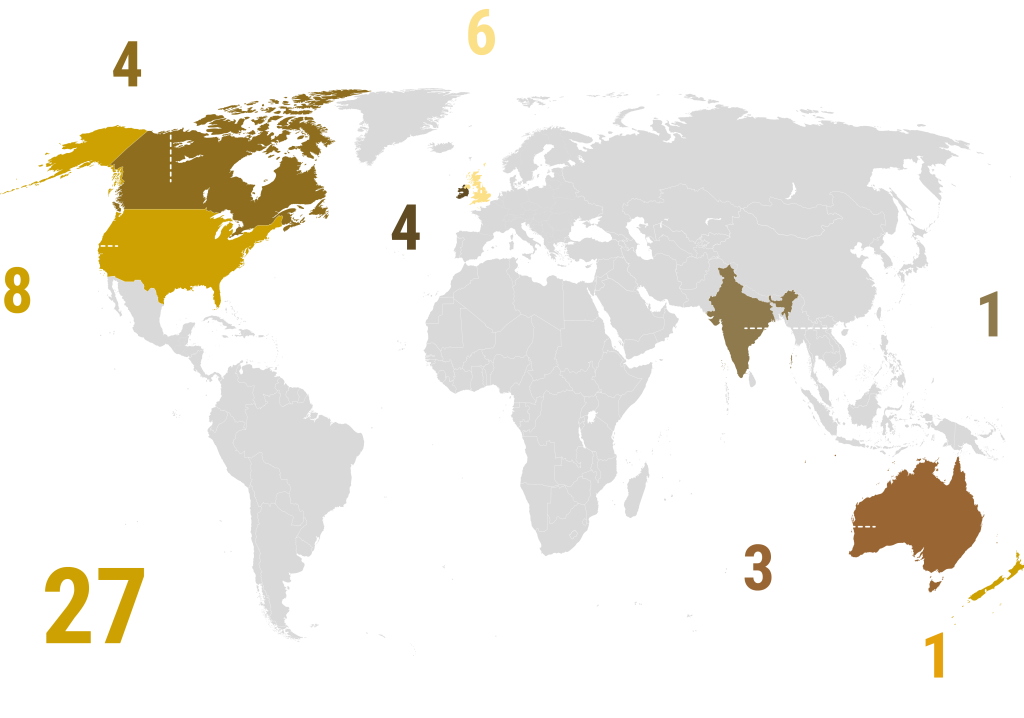
An in-depth analysis of the curricula proposed by the 27 universities allows us to sketch the contours of a specifically Anglo-Saxon Digital Humanities competency framework. Structured around 7 meta-competencies

The result of several months of reflection by MICA researchers, the White Paper on Digital Humanities in the Anglo-Saxon world has enabled students in the Master 2 DNHD program to develop a map of the competencies offered by universities in the United States, the United Kingdom, Ireland, Canada, India, New Zealand and Australia. During 4 months and with the help of a multitude of tools, the students have searched, processed and analyzed the data that allow them to present you this overview of the project, via various detailed visual representations.

SKILLS IN MOTION

The competencies are the main data for our work on the Digital Humanities in the Anglo-Saxon world, they allow us to understand and show the learning axes taught. The analysis of the competences was carried out on the teachings of the Anglo-Saxon Digital Humanities Masters.

To facilitate the analysis we have set up 7 meta-competences, which correspond to the main ones, then we went into detail by creating families of competences, of which there are 29.

As you read on, you will find these 7 meta-competencies, so it is important to understand how they work.

By hovering over the pictograms the definition of
the meta-skills is displayed

Meta-competence taking into account the teachings proposing the treatment of all the tasks around the data, passing by the recovery, the treatment, the visualization, etc.

DATA

Meta-competence taking into account research-oriented teachings, proposing theoretical and/or practical reflections on different subjects developing its knowledge.

RESEARCH

Meta-competence taking into account the teachings proposing the learning of a tool whatever the type of discipline.

TOOLS

Meta-competence taking into account the teachings proposing the learning of methodologies allowing to structure the stages of work on the various subjects of digital humanities or around.

METHODOLOGY

Meta-competence taking into account the teachings proposing the learning of paper or web publishing techniques.

EDITORIAL

Meta-competence taking into account the teachings proposing a development of cultural knowledge on the various subjects of digital humanities or around.

CULTURE

Meta-competency taking into account lessons offering physical or digitized word processing.

CORPUS

NAVIGATION IN ANGLO-SAXON SKILLS
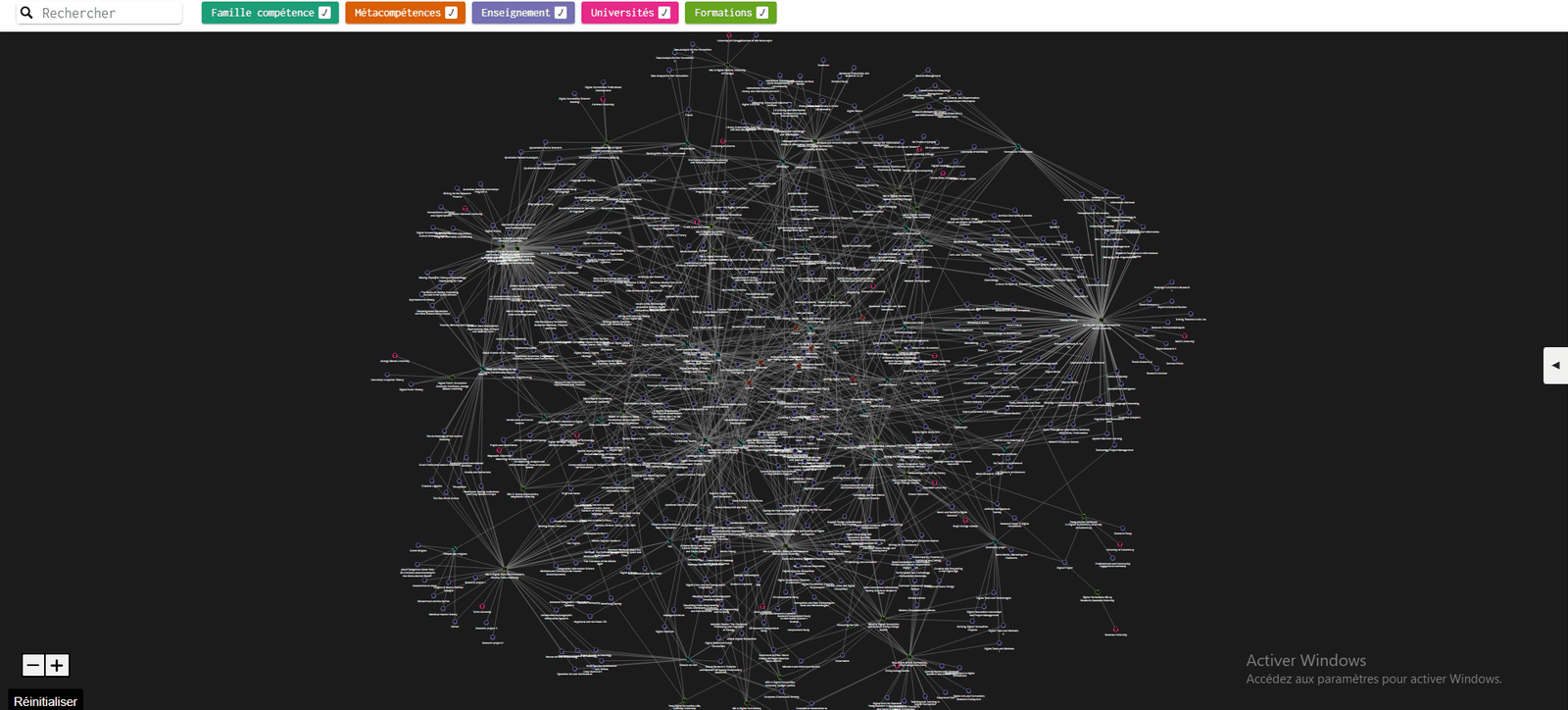
Competencies are of major importance in understanding and demonstrating the learning paths taught in the Anglo-Saxon world. For an immersion in the latter, we suggest you navigate through our map of competences under the Opensphere data exploration and visualisation tool developed by the E3D laboratory. Our map is called the DHSphere.

DIGITAL HUMANITIES VOCABULARY IN OCCURRENCES

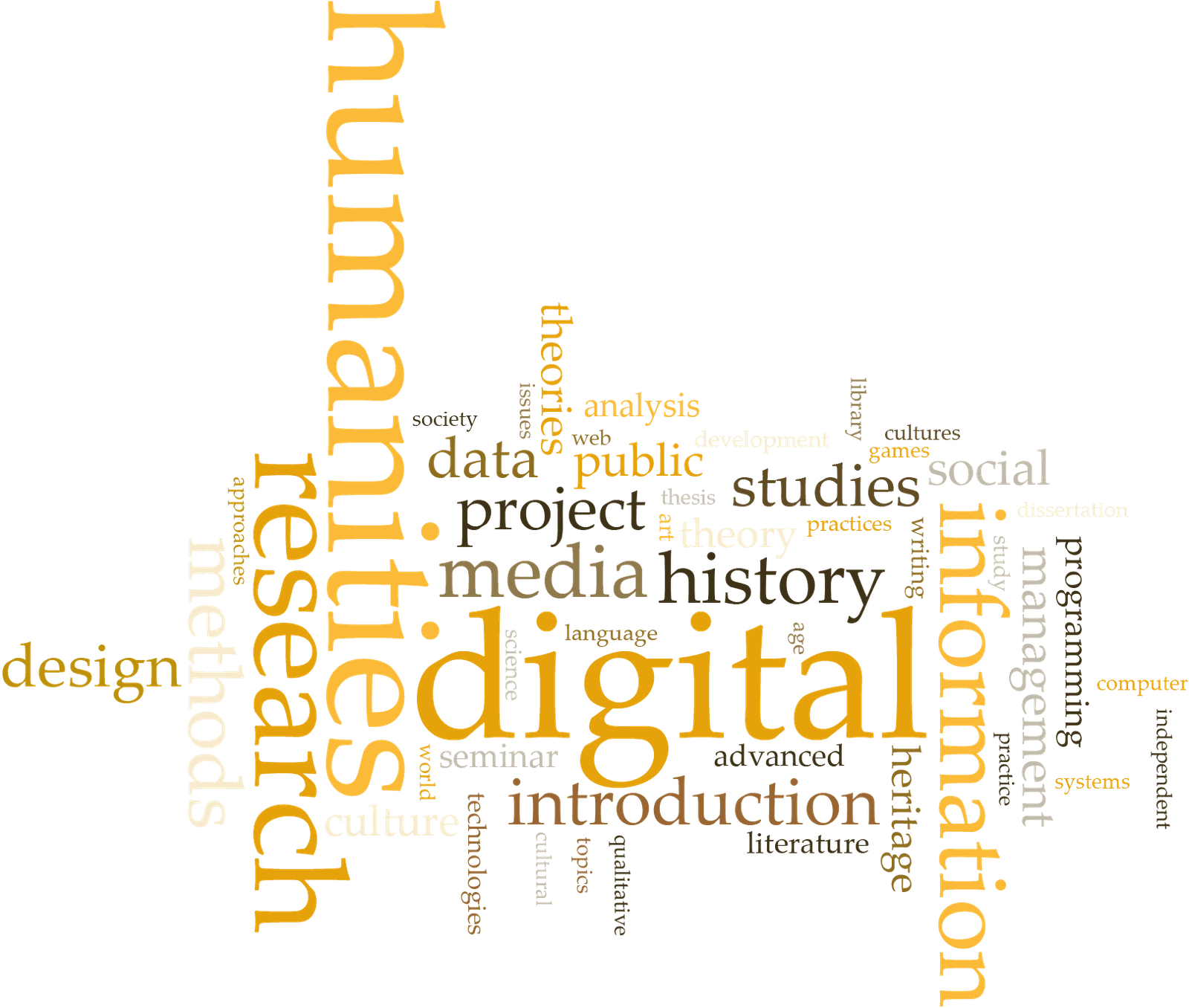
In addition to the mapping of competences, it is interesting to look at the frequency of occurrence of the words that make up the lessons recorded during the data recovery. This makes it possible to clearly display the most recurrent teaching axes in the Anglo-Saxon world of Digital Humanities.

The analysis was carried out with the digital text analysis tool Voyant tools, where we entered the titles of the 600 lessons. Subsequently, our sample was represented as a word cloud.
nuage_mots

EDUCATION HORIZON

Our target was Master’s level courses in the Anglo-Saxon world, with a focus on Digital Humanities. Using the data collected, and after cleaning up to keep only the necessary information, we were able to list the different courses in order to compare them and carry out a mapping of skills.
DIRECTORY OF COURSES

UniversityCourseLocation
Duke UniversityMA in Digital Art History/Computational MediaDurham, United States
Tufts UniversityMA in Digital Tools for Premodern StudiesMedford, United States
University of ChicagoMA in Digital StudiesChicago, United States
George Mason UniversityDigital Public Humanities Graduate CertificateFairfax, United States
Florida State UniversityMA in Digital HumanitiesTallahassee, United States
Concordia UniversityMaster of Arts in Digital HumanitiesAnn Arbor, United States
CUNY Graduate CenterMA in Digital HumanitiesNew York, United States
Loyola University ChicagoMA in Digital HumanitiesChicago, United States
Carleton UniversityCollaborative MA in Digital StudiesOttawa, Canada
McGill UniversityAd-Hoc MA in Digital HumanitiesGatineau, Canada
University of AlbertaMA in Digital HumanitiesEdmonton, Canada
University of AlbertaMA/MLIS in Digital HumanitiesEdmonton, Canada
Coventry UniversityPost-Digital Humanities MACoventry, United Kingdom
King's College LondonMA in Digital HumanitiesLondon, United Kingdom
University College LondonMA in Digital HumanitiesLondon, United Kingdom
University College LondonMSc in Digital HumanitiesLondon, United Kingdom
Lancaster UniversityDigital Humanities MALancaster, United Kingdom
Swansea UniversityDigital Humanities, MA by ResearchSwansea, United Kingdom
Maynooth UniversityMA in Digital HumanitiesMaynooth, Ireland
Maynooth UniversityMSc in Spatial eHumanitiesMaynooth, Ireland
Trinity College DublinMPhil in Digital Humanities and CultureDublin, Ireland
University College Cork (UCC)M.A. Digital Arts & HumanitiesCork, Ireland
Australian National UniversityMaster of Digital Humanities and Public CultureCanberra, Australia
Australian National UniversityMaster of Digital Humanities and Public Culture (advanced)Canberra, Australia
Western Sydney UniversityMaster of Digital HumanitiesSydney, Australia
University of CanterburyPostgraduate Certificate in Digital HumanitiesChristchurch, New Zealand
Indian Institute of Technology (IIT) JodhpurMaster of Science in Digital HumanitiesJodhpur, India

Specialisation of courses

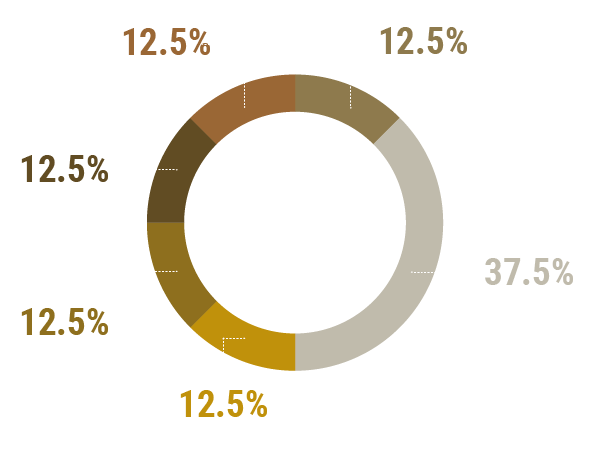
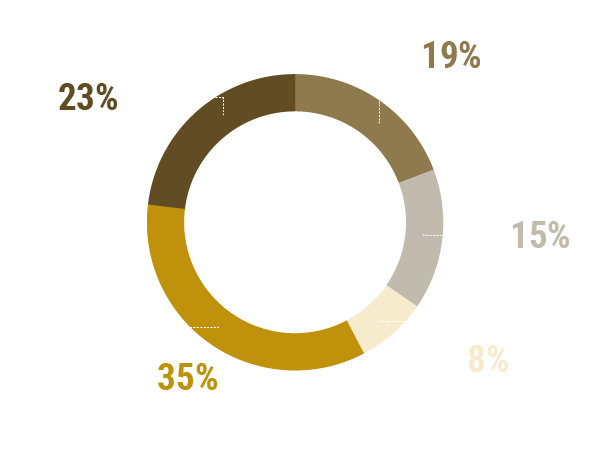
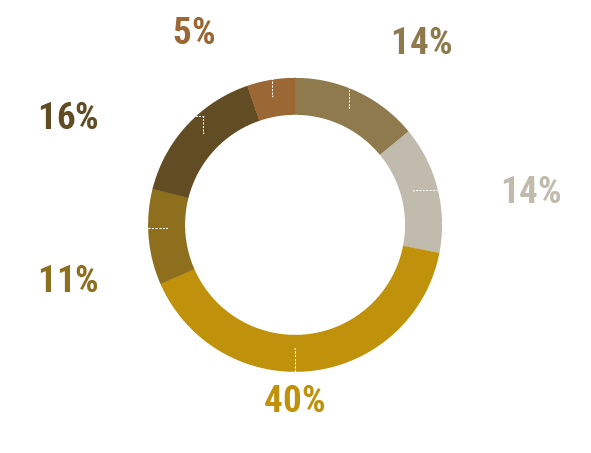
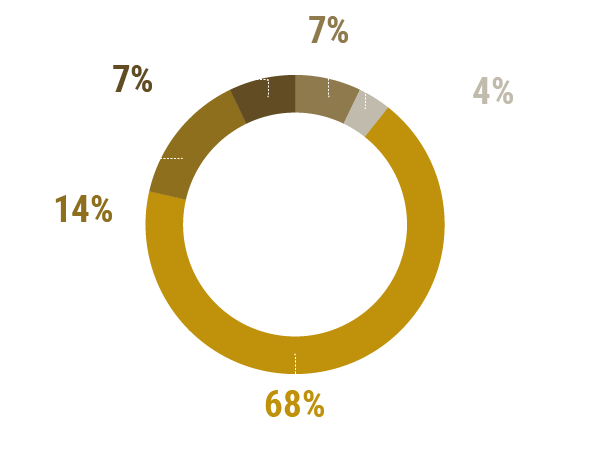
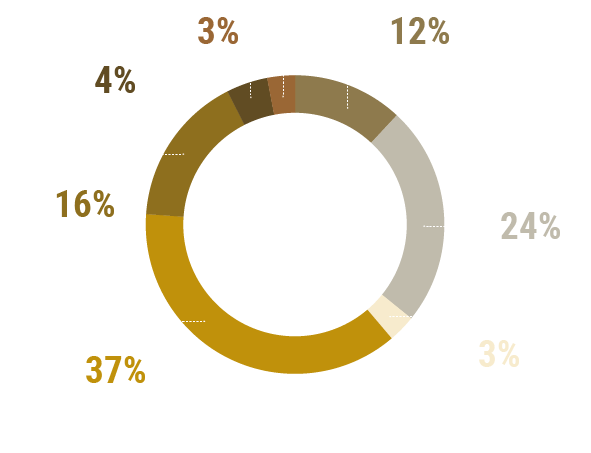
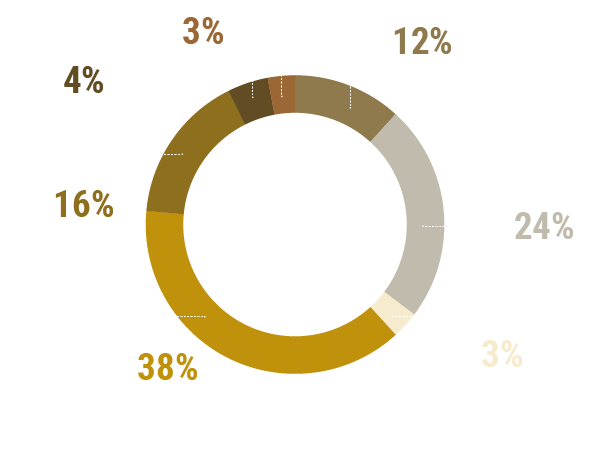
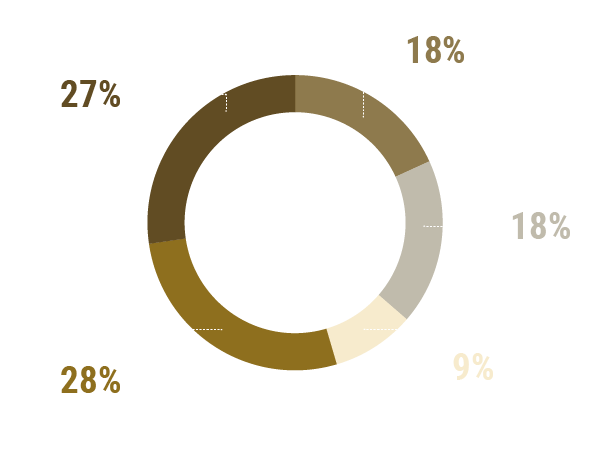
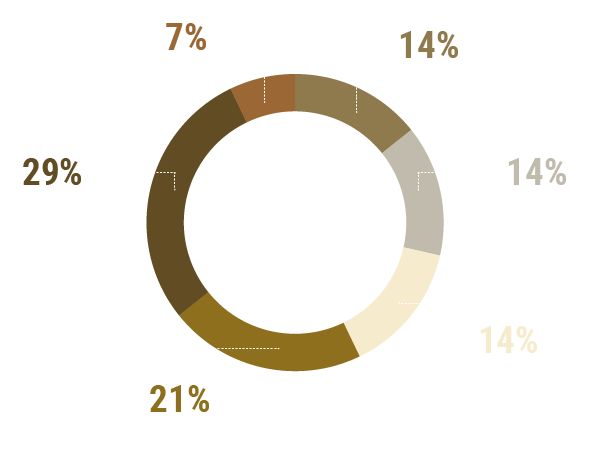
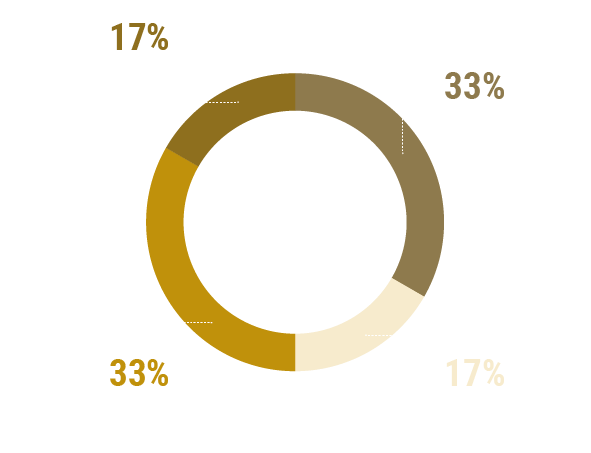
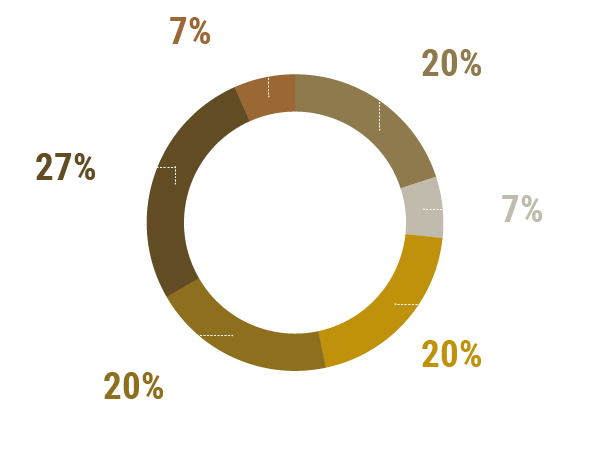
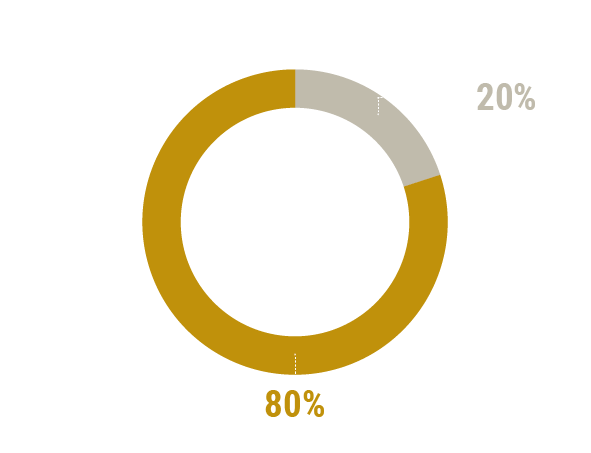
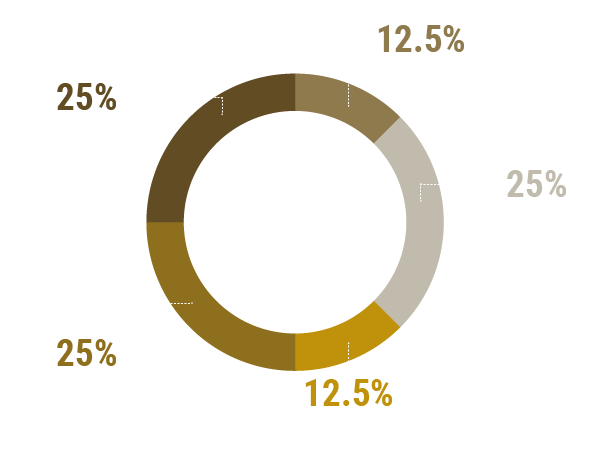
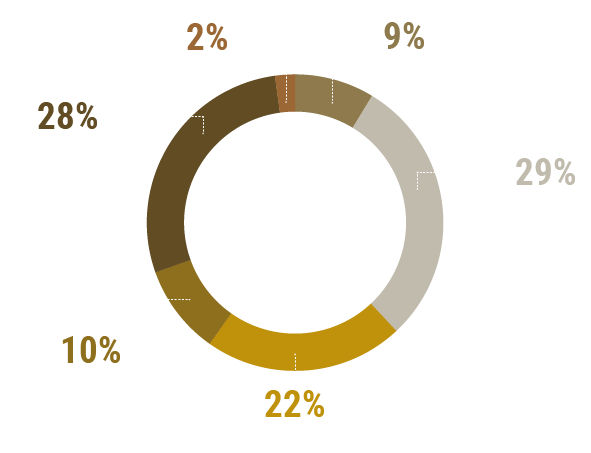
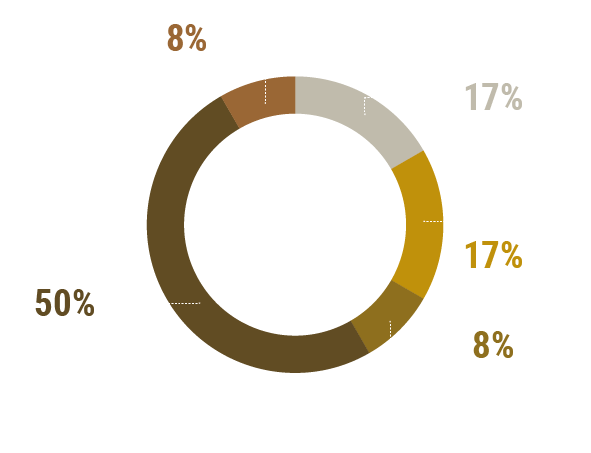
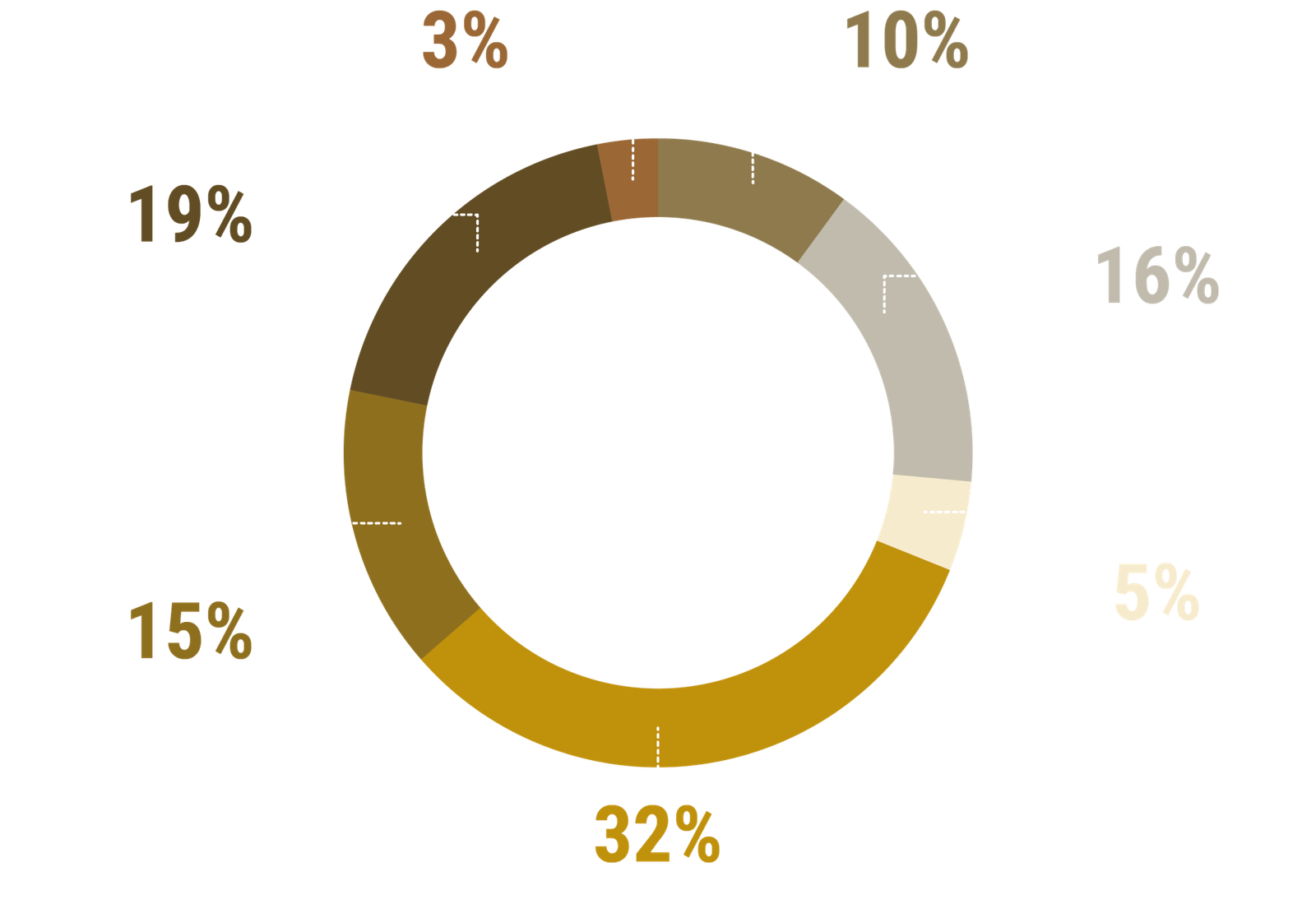
For a better understanding of the teaching offers of the Anglo-Saxon Masters, we have classified the different subjects taught in 7 well-defined axes, also called meta-competences.

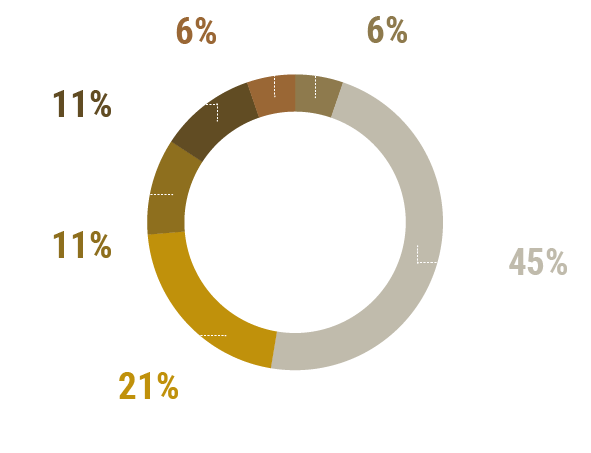
The infographic here models the percentage of these axes on the totality of the courses. We can see that a large part of the teaching is focused on the culture related to the digital or more global humanities.
Comparison of the teaching areas of the Anglo-Saxon courses

In addition to the previous figures on the training axes of the Masters, we propose this time to compare dynamically the different courses individually, on their teaching axes. You can find the 27 courses, as well as the 7 axes or meta-competences, with the possibility to filter them for a better readability or to focus on a particular entity. This dynamic visualisation was made possible thanks to the Tableau Public data visualisation tool.

Distribution of courses in the academic world

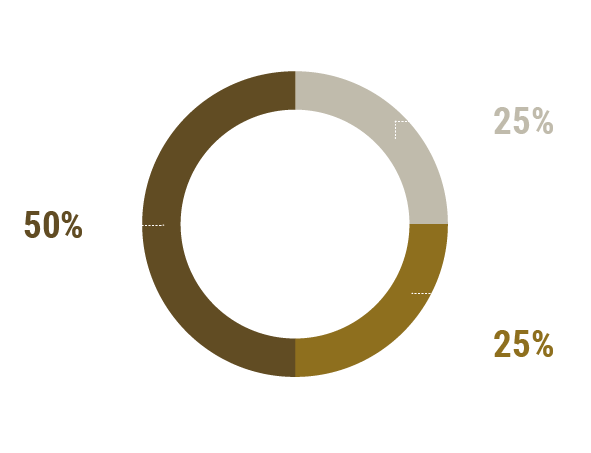
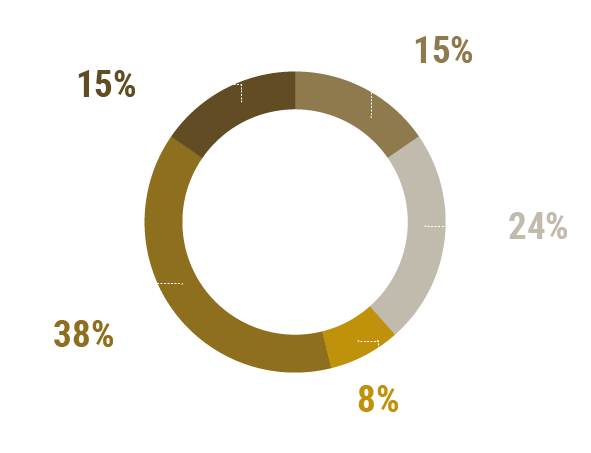
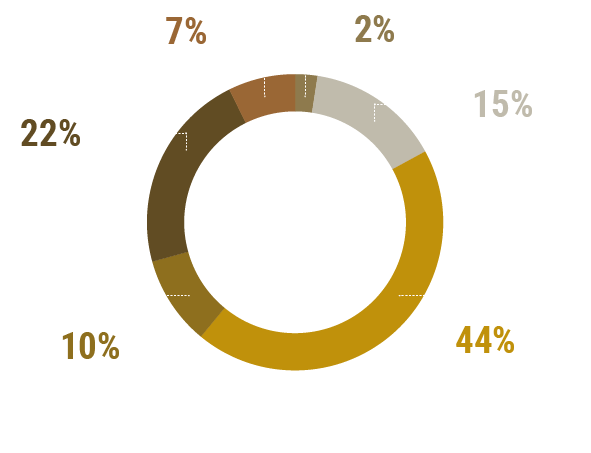
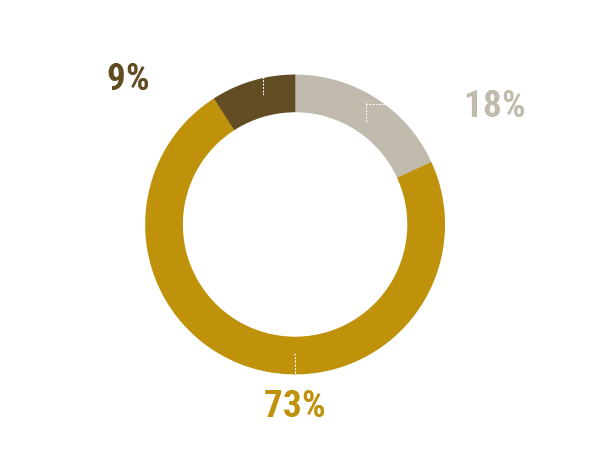
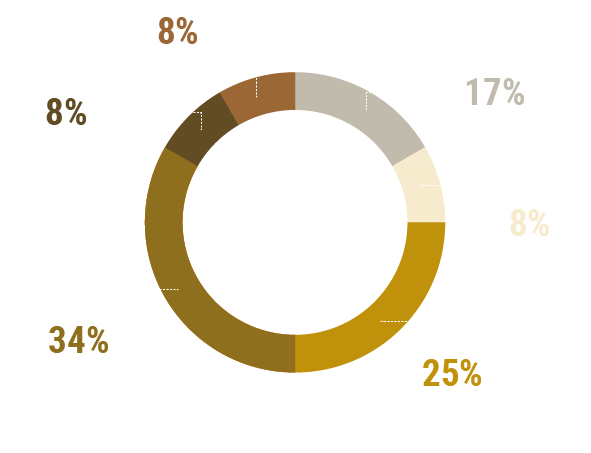
In the course of retrieving and processing the data, we noticed a noticeable difference in the way the Anglo-Saxon world views the Digital Humanities. To see this we set up an overview of the distribution of Digital Humanities courses across university departments.

We discover a field of 6 different departments, going from art, to social sciences, then ending with sciences.
Web notoriety

The world of Digital Humanities is in direct relation with the computer world and therefore, the web. The web notoriety of universities offering training in this field is logically an interesting criterion to present. To quantify this notoriety, we have based ourselves on 3 criteria for the classification of sites on the web, such as : the Alexa Rank, the MozRank and the Sem Rush Rank. The ranking is based on the Google search engine.

We can see that North American universities occupy a large place on the web, with a good visibility compared to other courses. The visualisation is done with the interactive data visualisation tool Tableau Public.

Methods

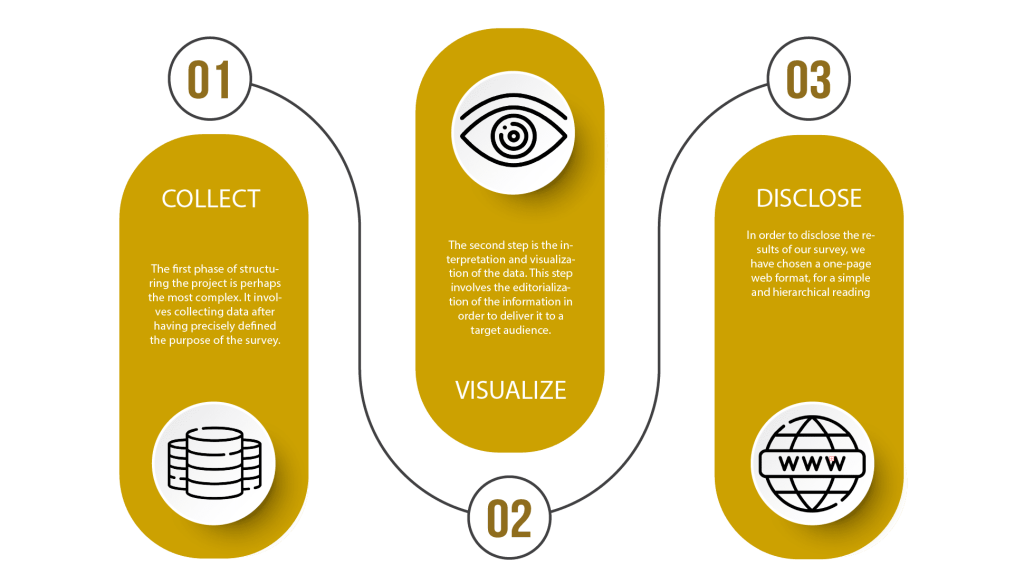
This project, and consequently its working methodology, was divided into two stages, a first part with all the Master students and a second part in a smaller group. 

In the first part, we sought to obtain the most relevant database possible. We reworked the topic, its approach and the database with the teachers, using various tools. We also established our first ideas for the final visual of the website, as well as learned other tools to develop our skills in several areas such as: webdesign, data processing, data visualisation, etc. The writing of the textual contents was also done with all the students, so that our realisations would be coherent despite the possible graphic differences.

Then, we split into groups to create two websites, each with its own visual identity and its own choice of tools, as well as a working methodology specific to the team, but whose contents remain the same.
Tools & Body of Data

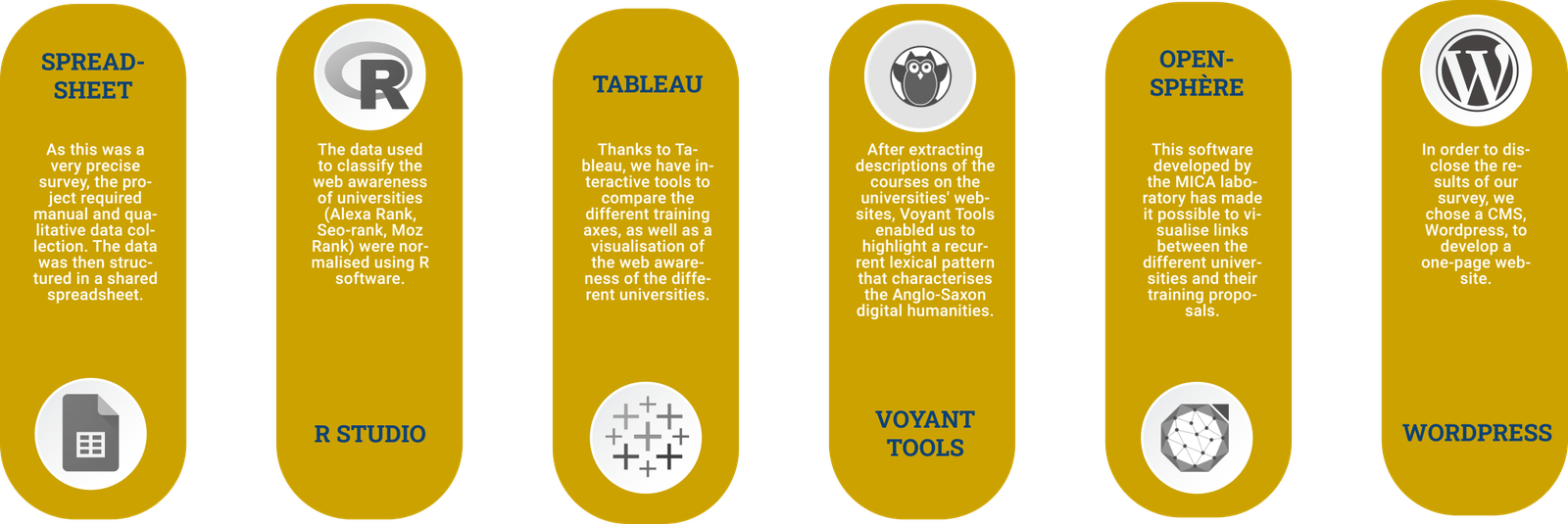
We used a variety of tools during the course of this project to make the most of our database. Firstly, the first version of this database was built on a Google Spreadsheet shared between all students. For the processing of specific aspects, R was used, as well as Prepost SEO and SEO Rank, respectively to obtain the Alexa and Moz Rank. Finally, AirTable and Opensphere were used to create the DHsphere. The infographic below allows you to see the different tools (common to all and specific to our group) that we used to accomplish this project.

Our project being rather specific on a very precise domain, the corpus of data that we have recovered remains important enough to have a complete and global view of the Anglo-Saxon world of Digital Humanities. The aim of this project is to establish a complete outline of the Anglo-Saxon world, which is very different from the French offers, by proposing a large number of courses, for students to choose from.

We are making this body of data available to you, which may, moreover, evolve and grow in the future in order to refresh the current information from this project.
Team & Partners

This project was carried out by the students of the class of 2020/2021 of the Master 2 Digital Document and Digital Humanities of Bordeaux Montaigne University, in collaboration with the teacher-researchers of the MICA laboratory and the Institute of Information and Communication Sciences (ISIC).


Concordia University
USA, Ann Arbor
English
Research Paper : Oui
19 524 €
Georgia Kreiger
internship : Non

At Concordia University, USA, the Master of Arts in Digital Humanities is defined as "an opportunity to use and create digital tools to contribute to solutions relevant to local and global communities". It offers nine courses over two years. The Master's degree is completed with a research paper, and is entirely online. This Master's degree leads to careers as webdesigner, e-learning designer or archivist, but also offers the possibility of pursuing a doctorate. Students from various backgrounds (History, English, Computer Science, Philosophy, Music) are accepted.

Focus of the course

University College Cork
Irelande, Cork
Arts, Celtic Studies and Social Sciences
Research Paper : Oui
6 130 €
Mike Cosgrave
Internship : Oui

At University College Cork, Ireland, the Master of Arts in Digital Arts and Humanities is defined as "providing a basic understanding of how information and communication technology (ICT) tools can be used to capture humanities data sources in digital form in order to formulate research questions, collaborate on research using tools, and present results, both in print and online". It offers a course of twenty-eight lessons over one year. The Master's degree is completed with a dissertation and an internship. A series of conferences involving professionals is also offered to students, enabling them to establish contact with the actors of the associated professions. The Master's programme encourages a multidisciplinary approach to the digital arts and humanities in a creative and scholarly atmosphere. The courses allow students to discover how digital tools and methods can be used in research in the arts and humanities, combining theory and practice.

Focus of the course

Art, Art History & Visual Studies
Research Paper : Oui
51 837 €
Victoria Szabo
internship : Non

At Concordia University, USA, the Master of Arts in Digital Humanities is defined as "an opportunity to use and create digital tools to contribute to solutions relevant to local and global communities". It offers nine courses over two years. The Master's degree is completed with a research paper, and is entirely online. This Master's degree leads to careers as webdesigner, e-learning designer or archivist, but also offers the possibility of pursuing a doctorate. Students from various backgrounds (History, English, Computer Science, Philosophy, Music) are accepted.

Focus of the course

Indian Institute of Technology
India, Jodhpur
Digital Humanities
Research Paper : Oui
11 433 €
N/A
internship : Non
N/A

The Master of Science in Digital Humanities at the Indian Institute of Technology, India, is designed as a gateway to address the developments, implications and inflections of digital technologies on historical and contemporary culture and society. It offers a course of twenty-eight courses, including compulsory and optional subjects. The Master's degree is completed with a research paper.

Focus of the course

University of Canterbury
Nouvelle-Zélande, Christchurch
Arts
Research Paper : Oui
7 268 €
N/A
internship : Non

At the University of Canterbury, New Zealand the Postgraduate Certificate in Digital Humanities is defined as dealing with a "highly interdisciplinary subject, with strong links to the world outside academia, in particular to the digital cultural heritage sector associated with galleries, art galleries, libraries and museums". It offers a course of 5 courses over one year. A research paper or internship is not required to complete the Master's degree. During the course, students acquire the technical and methodological skills to undertake projects using a variety of digital tools, translate complex information into accessible language, and collaborate with multiple stakeholders.

Focus of the course

Western Sydney University (Parramatta South)
Australie, Sydney
Humanities and Communication Arts
Research Paper : Oui
21 039 €
Di Dickenson
internship : Non
At the University of Western Sydney, Australia the Master of Digital Humanities is defined as providing a deep understanding of the digital humanities landscape, from mobile media to network technologies, from cyber justice to strategic communication. It offers a course of thirteen courses over 1 to 3 years. A research paper or internship is not required to complete the Master's degree. This Master's degree leads to the professions of : Archivist, Gallerist, Web Designer, Community Manager, as well as heritage professions.

Focus of the course

Australian National University
Australie, Canberra
Arts and Social Sciences
Research Paper : Oui
26 982 €
Katrina Grant
internship : Non

At the Australian National University, Australia, the Master of Digital Humanities and Public Culture (Advanced) is defined as "enabling students to develop advanced skills in digital literacy and applied humanities". It offers sixty-nine courses over two years. The Master's degree is completed with a research paper. A series of professionals and cultural, public and governmental institutions are also at the disposal of the students, allowing them to establish contact with the actors of the associated professions. At the end of the course, students should be able to apply a critical, theoretical and methodological research structure to their work in order to understand the key issues raised by the digital humanities, as well as by the use of information technologies in art and the social sciences in general.

Focus of the course

Australian National University
Australie, Canberra
Arts and Social Sciences
Research Paper : Oui
26 982 €
Katrina Grant
internship : Oui

At the Australian National University, Australia, the Master of Digital Humanities and Public Culture is defined as "enabling students to develop advanced skills in digital literacy and applied humanities". It offers sixty-nine courses over two years. The Master's degree is completed with a research paper. A series of professionals and cultural, public and governmental institutions are also at the disposal of the students, allowing them to establish contact with the actors of the associated professions. At the end of the course, students should be able to apply a critical, theoretical and methodological research structure to their work in order to understand the key issues raised by the digital humanities, as well as by the use of information technologies in art and the social sciences in general.

Focus of the course

Trinity College Dublin
Ireland, Dublin
School of Languages, Literatures and Cultural Studies
Research Paper : Oui
9 370 €
Jennifer Edmond
internship : Oui

At Trinity College Dublin, Ireland, the Master of Philosophy in Digital Humanities and Culture is defined as "offering students the opportunity to engage with this research work through digitally mediated humanities technologies, methodologies and theories". It offers a course of sixteen lessons over one year. The completion of the Master's degree is complemented by the production of a research paper. The Master is open to students from a wide variety of backgrounds, which contributes to a diversity of perspectives, enriching interactions and discussions.

Focus of the course

Maynooth University
Ireland, Maynooth
Digital Humanities
Research Paper : Non
4 000 €
Konstantinos/Costas Papadopoulos
internship : Oui
N/A

At Maynooth University, Ireland, the Master of Science in Spatial e-Humanities is defined as "designed to provide both a historical context and a theoretical foundation for the field, while offering students strong skills in contemporary digital methods and technologies. It offers eleven courses over two years. The Master's degree is completed by a research paper and an internship.

Focus of the course

Maynooth University
Ireland, Maynooth
Digital Humanities
Research Paper : Non
4 000 €
N/A
internship : Non
N/A

At Maynooth University, Ireland the Master of Arts is defined as "combining modern tools and methodologies that provide students with the creative, technological, digital, entrepreneurial and managerial skills needed to respond to a competitive economy that demands an agile, adaptable and creative workforce. It offers a course of fourteen courses over two years. The Master's degree is completed by a research paper and an internship. This Master's degree leads to careers as webmasters, developers, archivists, or in cultural institutions.

Focus of the course

Swansea University
United Kingdom, Swansea
Arts and Humanities
Research Paper : Oui
5 341 €
Kathryn Jones
internship : Oui

At Swansea University, UK the Master of Arts (MA) Digital Humanities, by Research is defined as undertaking a substantial project driven by students' passions and interests. It offers a one or two year course of study. The Master's degree is completed by the production of a research paper. This Master's degree leads to careers in: teaching, as well as in governmental institutes. The Master's degree consists only of the writing of a research paper and the research leading to it.

Focus of the course

Lancaster University
United Kingdom, Lancaster
History
Research Paper : Oui
11 763 €
N/A
internship : Non

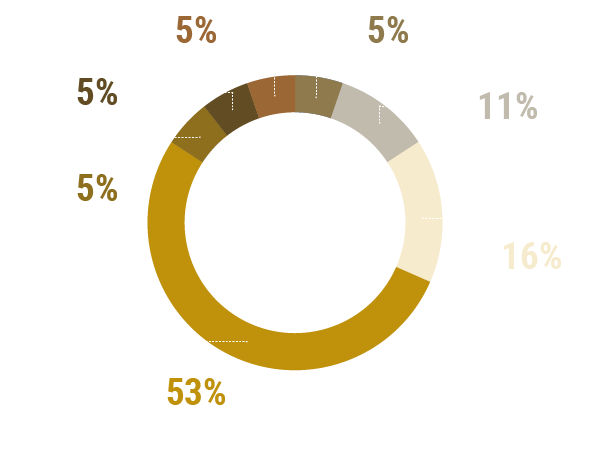
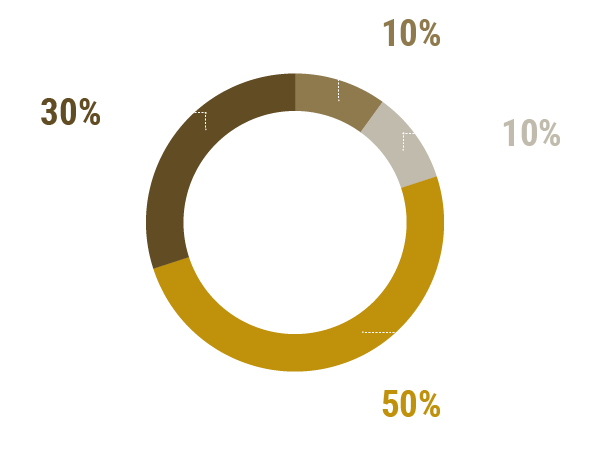
At Lancaster University, UK, the Digital Humanities MA is defined as a course with a dual focus on digital approaches and more traditional humanities courses. It offers a twenty-course programme, including compulsory and optional subjects, over one year of full-time study or two years of part-time study. The Master's degree is completed by a research paper and an internship.

Focus of the course

University College London
United Kingdom, London
Informations Studies
Research Paper : Oui
15 312 €
Sarah Davenport
internship : Oui

At the University College London, UK, the Master of Science in Digital Humanities is defined as "aiming to produce applications, models and theories that make possible new kinds of research, in the humanities disciplines, in the cultural heritage and information sectors, and in computing and related fields". It offers six courses over one, two or five years. The Master's degree is not completed by a research paper but by an internship. This Master's degree leads to careers as communication officers, data analysts, as well as to positions in cultural or governmental institutions. The Master is linked to the Master of Arts in Digital Humanities, also available at the University College London.

Focus of the course

University College London
United Kingdom, London
Informations Studies
Research Paper : Oui
15 312 €
Sarah Davenport
internship : Non

The Master of Arts in Digital Humanities at University College London, UK, is defined as "studying the impact of computer technology on cultural heritage, museums, libraries, archives, digital culture and the information sector while developing skills". It offers six courses over one, two or five years. The Master's degree is not completed by a research paper but by an internship. This Master's degree leads to careers as communication officers, data analysts, as well as to positions in cultural or governmental institutions. The Master is linked to the Master of Science in Digital Humanities, also available at the University College London.

Focus of the course

King's College London
United Kingdom, London
Digital Humanities
Research Paper : Oui
13 104 €
Paul Spence
internship : Non

At King's College, UK, the Master of Arts in Digital Humanities is defined as "studying the history and current state of digital knowledge production, exploring the theoretical and practical challenges of modelling, curating, analysing and interpreting digital representations of human culture in all its forms, past and present". It offers a course of fifteen lessons over one year full-time, two years part-time. The Master's degree is not completed by a research paper or an internship. This Master's degree leads to jobs as community manager, marketing project manager, as well as teaching and publishing, but also offers the possibility of pursuing a doctorate. This Master's degree offers the opportunity to study, construct and critique practical digital research experiences focused on the arts, humanities, social sciences or the cultural sector.

Focus of the course

Coventry University
United Kingdom, Coventry
Arts and Humanities
Research Paper : Oui
12 344 €
N/A
internship : Non
N/A

At Conventry University, UK, the Master of Arts & Post-Digital Humanities is defined as "a new, innovative and interdisciplinary course that combines humanistic research with digital media expression". It offers six courses over one year. The Master's degree is not completed by a research paper or internship. This Master's degree leads to jobs as event project manager, journalist, marketing project manager or designer as well as positions in universities or cultural and governmental institutions. Students in History, Sociology, International Relations, Politics and Literature are encouraged to apply.

Focus of the course

University of Alberta
Canada, Edmonton
Library & Information Studies
Research Paper : Oui
3 395 €
N/A
internship : Oui

At the University of Alberta, Canada, the MA/MLIS in Digital Humanities is defined as "an inter-departmental double Master's degree in collaboration with the Master of Arts in Digital Humanities and the Master of Library and Information Studies". It offers a training programme of forty-three courses over three years. The Master's degree is completed by the production of a research paper. A series of conferences involving professionals is also offered to students, enabling them to establish contact with the actors of the associated professions. A simple Master in Digital Humanities in two years is also possible.

Focus of the course

University of Alberta
Canada, Edmonton
Media & Technology Studies
Research Paper : Oui
3 395 €
Daniel Laforest
internship : Non

At the University of Alberta, Canada, the Master of Arts in Digital Humanities is defined as "specialising in a number of research areas, including digital mapping, video games, text and data mining, text visualisation and analysis, sound design, and interactive interface design. It offers ten courses over two years. The Master's degree is completed by the production of a research paper. This Master's degree leads to careers as research engineers, as well as to various teaching jobs or jobs in cultural institutions, and also offers the possibility of pursuing a doctorate. A three-year double MA/MLIS (Master of Arts/Master of Library and Information Studies) is also possible.

Focus of the course

McGill University
Canada, Gatineau
Languages, Literatures, and Cultures
Research Paper : Non
4 302 €
Cecily Raynor
internship : Oui

At McGill University, Canada, the Master of Arts in Digital Humanities is defined as "focused on learning a variety of methods for research as well as developing a critical eye for the effects of computing on scholarship". It offers ninety-five courses over two years. The Master's degree is completed by the production of a research paper. A series of conferences involving professionals is also offered to students, enabling them to establish contact with those involved in the associated professions.

Focus of the course

CarletonUniversity
Canada, Ottawa
Arts
Research Paper : Oui
3 810 €
Shawn Graham
internship : Non

At Carleton University, Canada the Collaborative Master of Arts in Digital Studies is defined as giving students the opportunity to explore how digital technologies are changing our understanding of art, film, music, literature and popular culture, how they are developing new forms of collective Research Paper and how they are creating global communities and intercultural dialogue. It offers a course of thirteen courses over two years. The Master's degree is completed with a research paper and an internship.

Focus of the course

Loyola University Chicago
USA, Chicago
Arts et Sciences
Research Paper : Oui
55 514€
Elizabeth Hopwood
internship : Oui

At Loyola University Chicago, USA, the Master of Arts in Digital Humanities is defined as "a transdisciplinary programme focused on research and project management". It offers eleven 30-hour courses. The Master's degree is completed by the production of a research paper. The courses focus both on the discussion of the theories that shape and define the field of Digital Humanities and on the completion of practical projects. The courses are designed to provide technical skills to students in the humanities, as well as research methods to those with a technical or computer science background.

Focus of the course

CUNY Graduate Center
USA, New York
English
Research Paper : Non
5 718€
Matthew K. Gold
internship : Oui

At the CUNY Graduate Center, USA, the Master of Arts in Digital Humanities is defined as "introducing students to the fundamental principles and methods of the digital humanities and includes a specialisation in one of three areas: digital textuality, data visualisation and mapping, and digital pedagogy. It offers a course of thirteen lessons over two years. The Master's degree is completed by a research paper and an optional internship.

Focus of the course

Florida State University
USA, Tallahassee
Arts & Sciences
Research Paper : Oui
5 612 €
Kathryn Stoddard
internship : Oui

At Florida State University, USA the Master of Art in Digital Humanites is defined as encompassing a wide variety of activities that in different ways bring together data science, computer science, data curation and humanistic study. It offers a course of twenty-eight courses over two years. The Master's degree is completed with a research paper.

Focus of the course

George Mason University
USA, Fairfax
Humanities & Social Science
Research Paper : Oui
9 696 €
Brian Platt
internship : Oui

At George Mason University, USA, the Master in Digital Public Humanities is defined as "training students in a wide range of digital tools that are increasingly in demand in humanities careers". It offers a four-course course over two years. The Master's degree is not completed by a research paper, but by an internship, and is entirely online. This Master's degree leads to careers as marketing project manager, bookseller, archivist, press relations officer, as well as to teaching careers. A distance internship is required in a department of the Smithsonian Institute.

Focus of the course

University of Chicago
USA, CHicago
Humanities
Research Paper : Oui
55 089 €
David Schloen
internship : Non
At the University of Chicago, USA, the Master of Arts in Digital Studies is defined as "a stepping stone to careers that require a range of computer, writing and critical thinking skills". It offers a one-year course of ten courses. The Master's degree is completed with a research paper. This Master's degree leads to jobs as a developer, digital marketing manager, or communication manager, as well as to positions in universities or cultural institutions. This Master is qualified as a "STEM" degree (Science, Technology, Engineering & Mathematics).

Focus of the course

Tufts University
USA, Medford
Classical Studies
Research Paper : Oui
47 662 €
Gregory Crane
internship : Non
The Master of Arts in Digital Tools for Premodern Studies at Tufts University, USA, is defined as "the study of the creation, transmission, preservation, and transformation of knowledge across time and culture from antiquity to the Renaissance and early modern periods. It offers forty-eight courses over two years. The Master's degree is completed by the production of a research paper. By the end of the two years of study, students should be familiar with the process of advanced research in the humanities and with a range of computerised methods of data collection, formatting, analysis, annotation and display.

Focus of the course